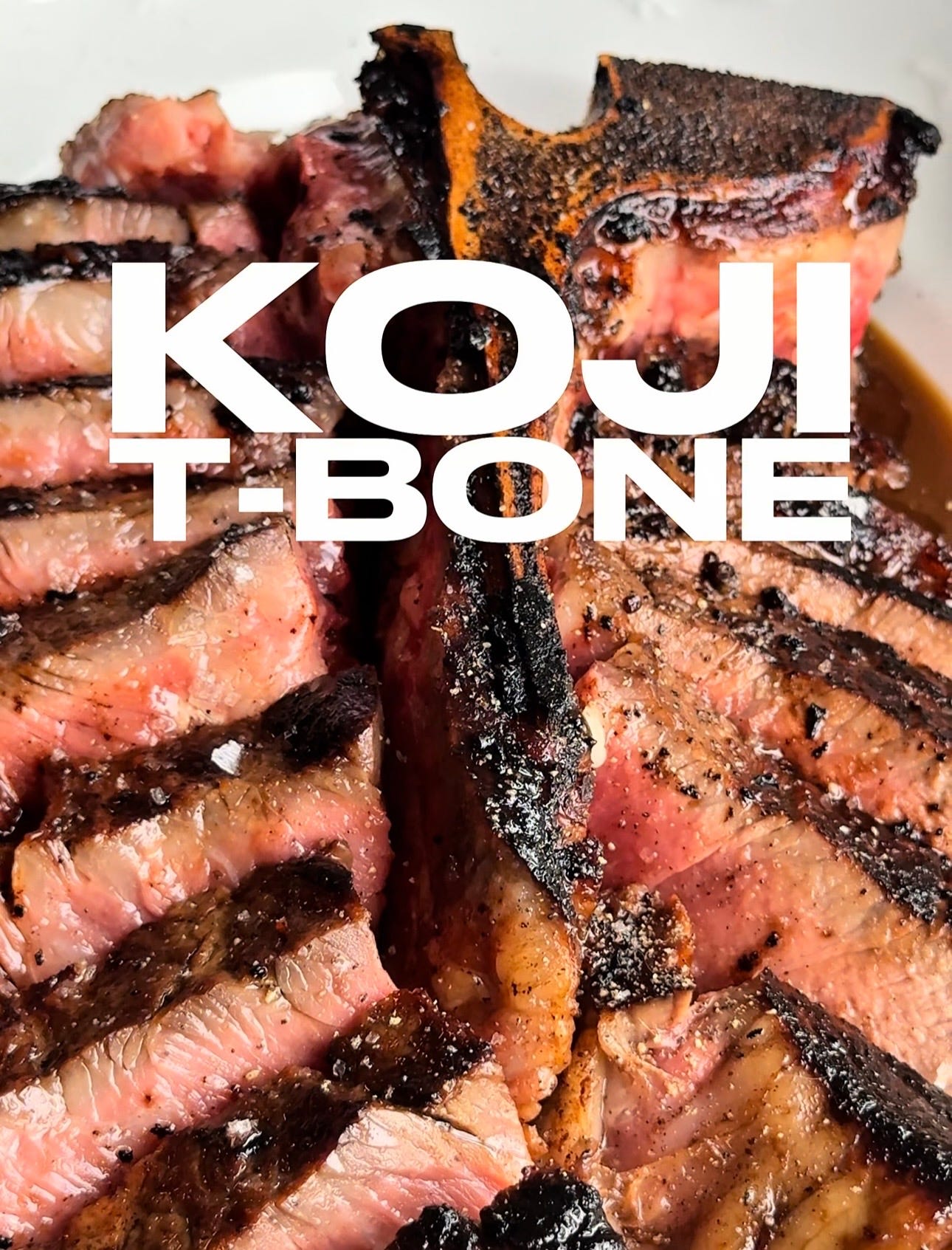
Koji T-bone
A pretty sexy Koji marinated beef, with a dashi demi-glaçe

This recipe means a lot to me, it’s a collaboration with my friend Robin, aka Gargantua. For nearly three years we’ve been creating food content on the side while working full‑time in kitchens, grinding through the long tail before anything stuck. It took a while for both of us to start seeing real return on the work, and through it all we pushed each other to keep publishing, and stay steady.
After three years of late-night calls, him in Canada, me in Europe, we finally met in person. I was in Montréal for a few days, and we seized the moment to cook together. We made two recipes; this is the first. We wanted something that felt true to both of us: Robin’s food is bold and unapologetic, meat-forward, drenched in glossy sauces and generous portions. The challenge was to marry both our sensibilities, and this dish is the result.
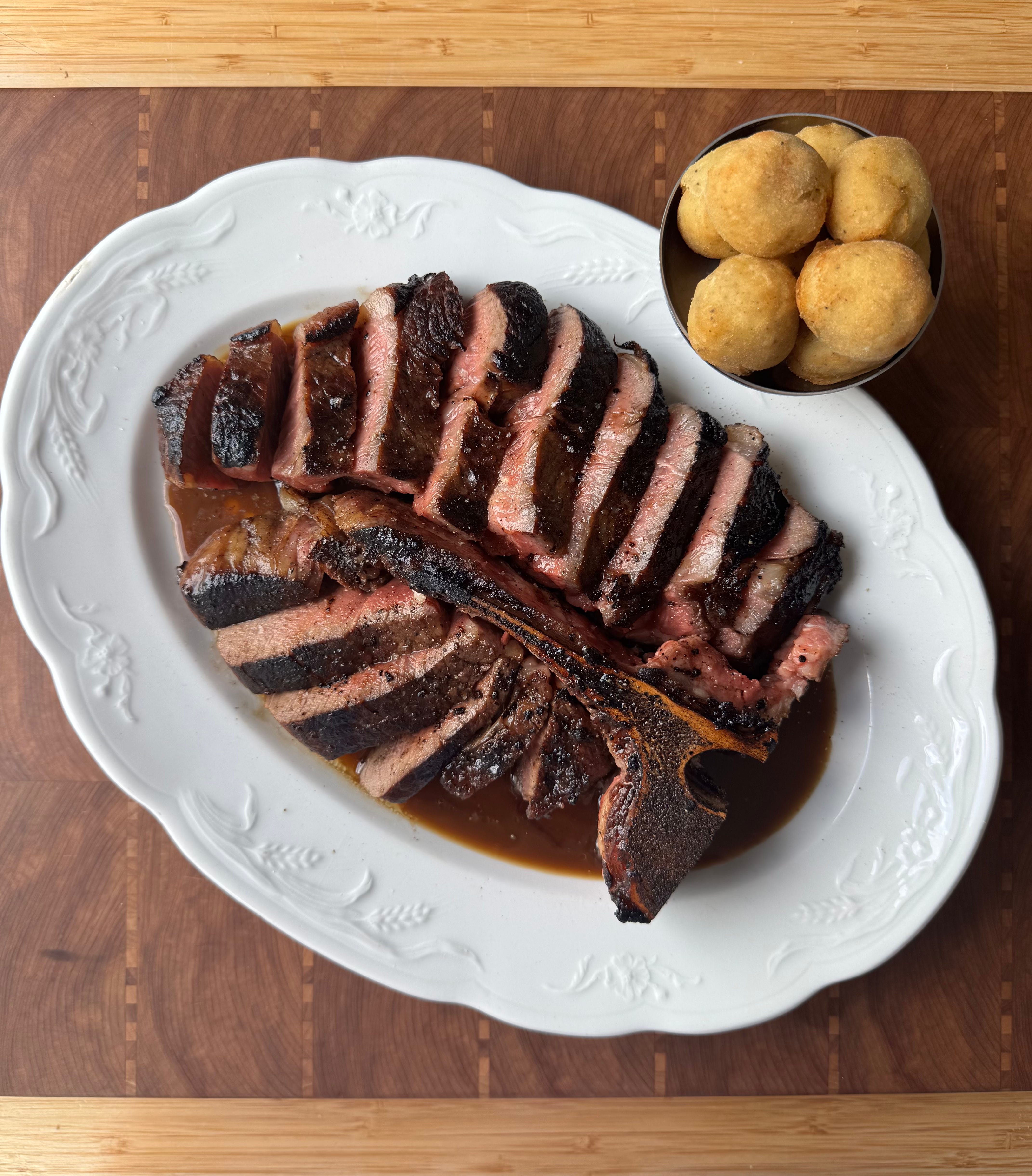
We marinated a beautiful T‑bone in a homemade shoyu shio koji, then served it with a smoky demi‑glace built on a smoky dashi. On the side: pillowy buckwheat pomme dauphines, crisp outside, airy inside, for a rustic, comforting contrast. We wanted this recipe to be a moment, it isn’t the easiest, nor does it rely on the most common pantry staples, but with a bit of digging you can find everything. Ready to dive in?
Difficulty: Medium
Time prepping: 1h30m
Time waiting: Minimum 24 hours (marinade)
Serves 2 to 3:
• A nice T‑bone steak
• Shoyu Shio koji
• 300 ml veal demi‑glace
• Katsuobushi (bonito flakes)
• Dried shiitake mushrooms
• 100 ml dashi (recipe at the end)
• 1 teaspoon Crème fraîche
• 1/2 teaspoon Soy sauce
For the pomme dauphines:
• 500 g starchy potatoes
• Salt, pepper
• 125 ml water
• 60 g butter
• 40 g all‑purpose flour
• 35 g buckwheat flour
• 3 eggs
We’ll start with the T‑bone, it needs 24 hours to work its magic. If you can’t find shio koji, don’t stress: the steak will still be excellent on its own. The koji here just nudges things further, tenderizing the meat, layering in umami, and helping you get that extra-deep, glossy caramelization on the sear.
Shio koji is basically a wet seasoned condiment made from rice koji, salt and water, the enzymes work in the brine, turning it into a salty‑sweet, umami‑rich marinade and tenderizer you can use straight away. For this recipe we used a shio koji made with a high‑quality shoyu, a pure umami bomb. You can buy ready‑made shio koji in some markets, but if you only find dry rice koji you can make your own; expect a few days of gentle fermentation. Check online for detailed how‑tos.
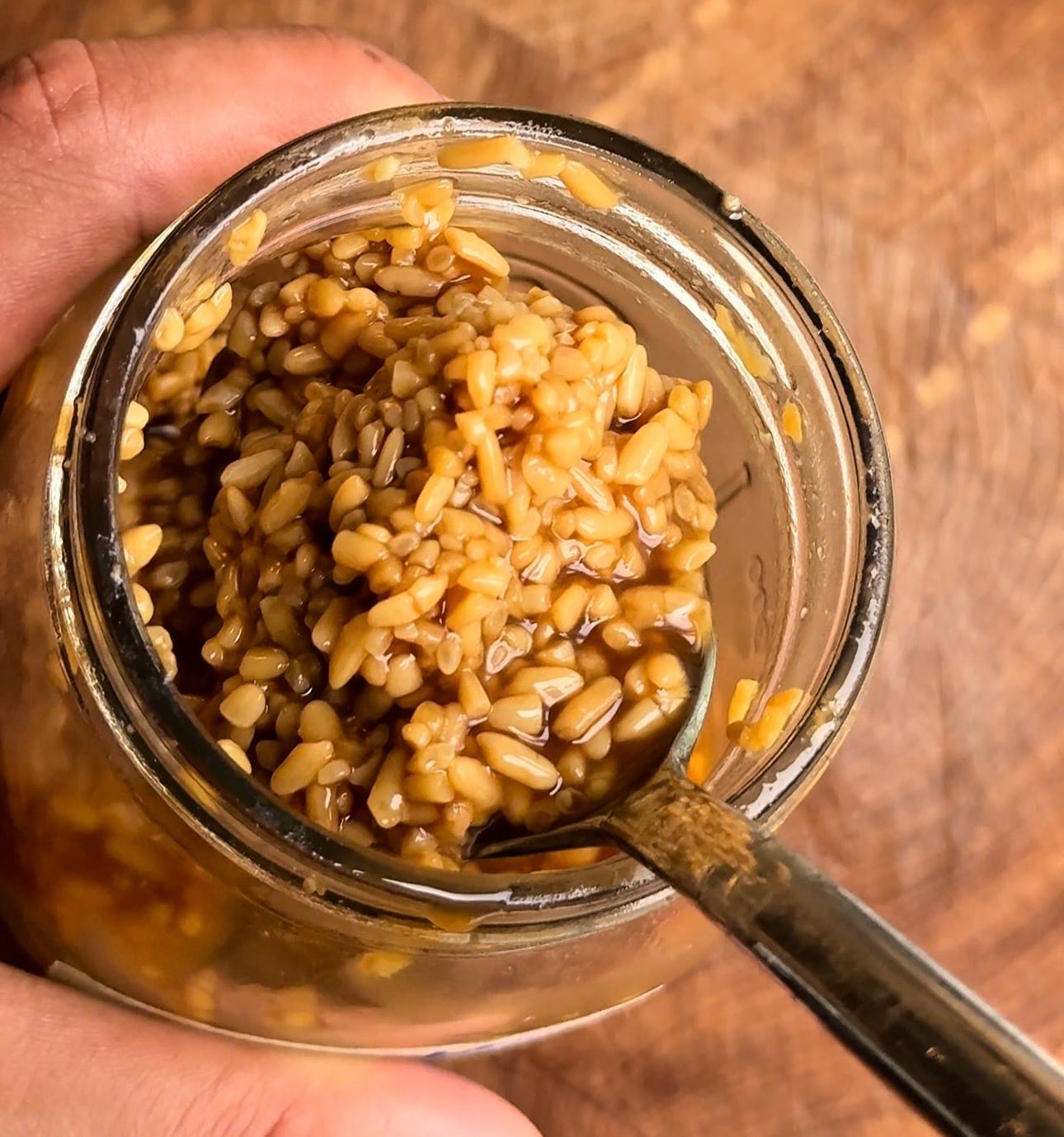
The T-bone, step by step:
24 hours before, coat the T‑bone thoroughly with shio koji, wrap tightly in cling film and refrigerate.
The next day, wipe off the koji, rinse quickly under cold water, then leave the steak uncovered in the fridge to dry for about 2 hours.
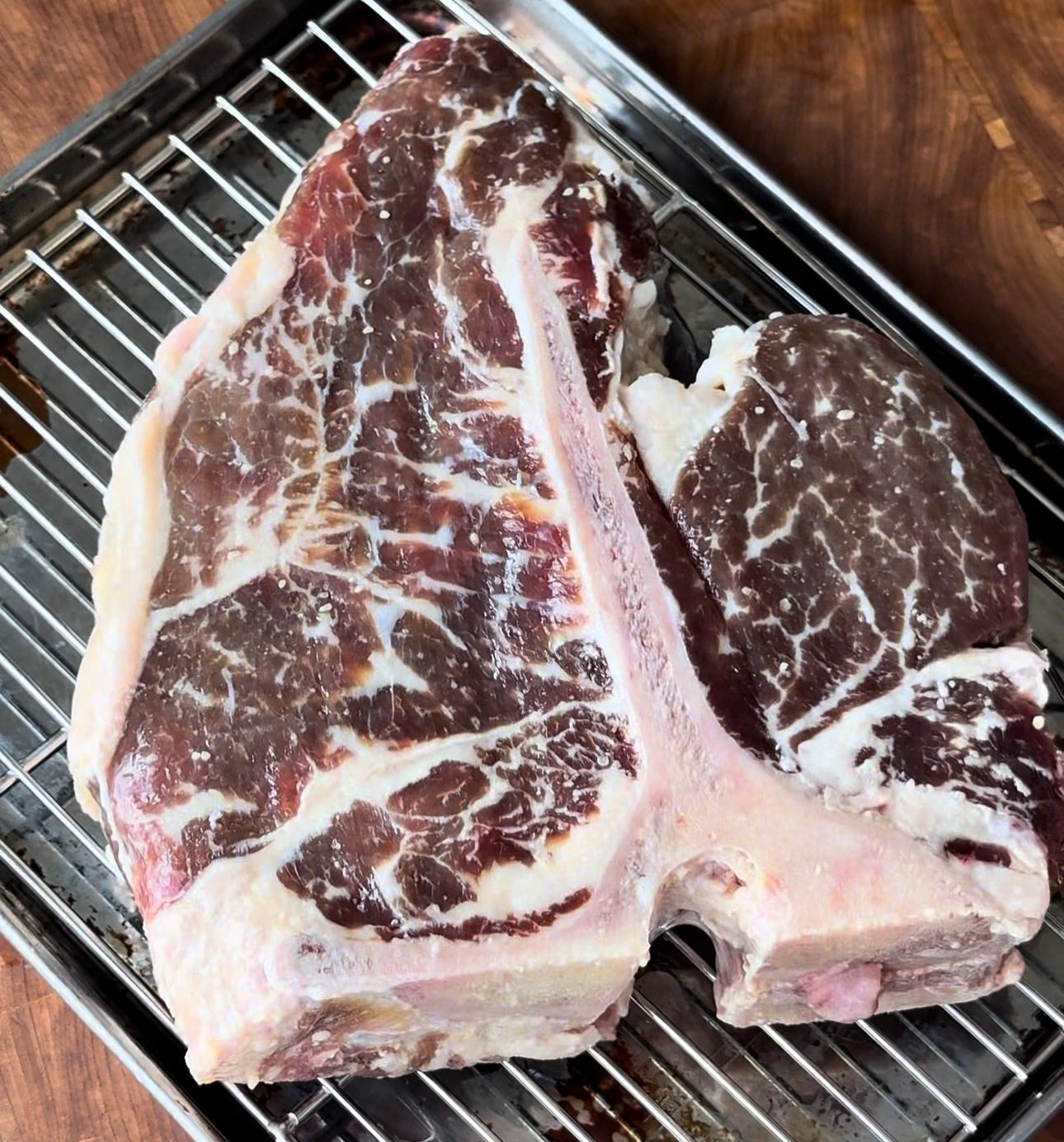
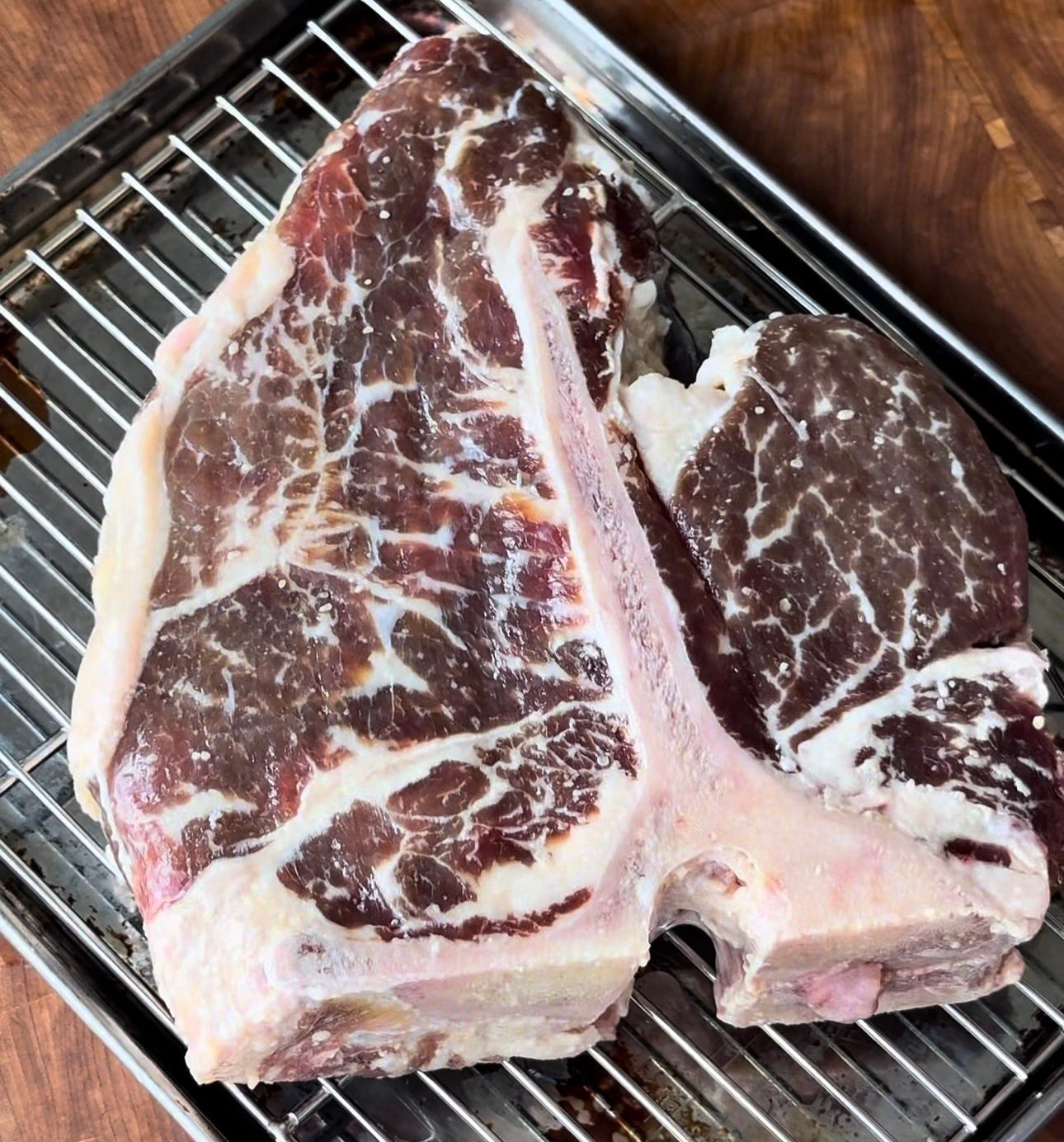
That’s what you should get after 24hrs in shio koji, the meat is darker. Take the meat out 20–30 minutes before cooking to come toward room temp.
Sear over very high heat, about 60 seconds per side, watching closely (koji accelerates browning). You want deep caramelization, not char.
Finish in a 180°C (350°F) oven for 7–8 minutes.
Rest the steak roughly 10 minutes before slicing.
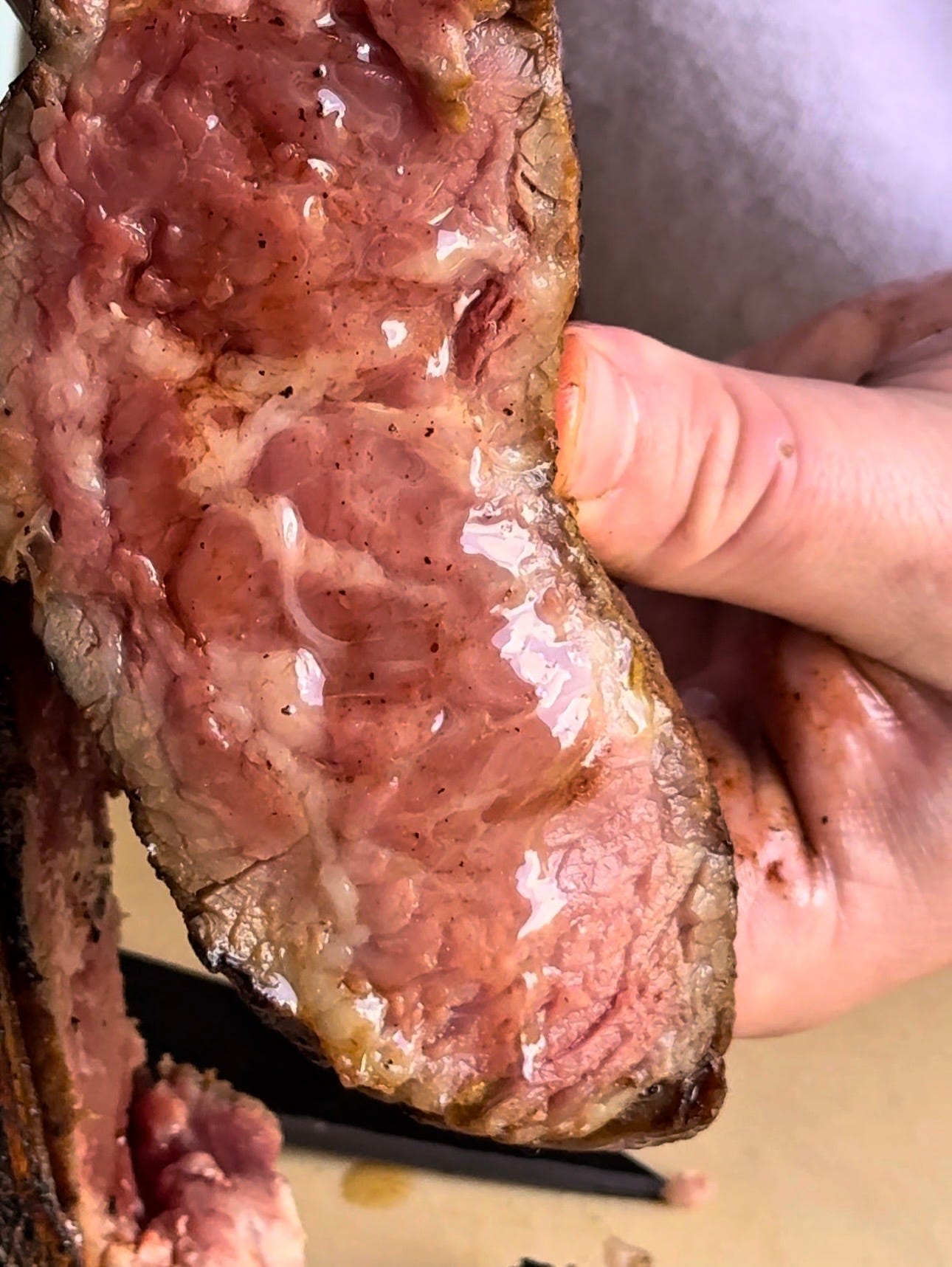
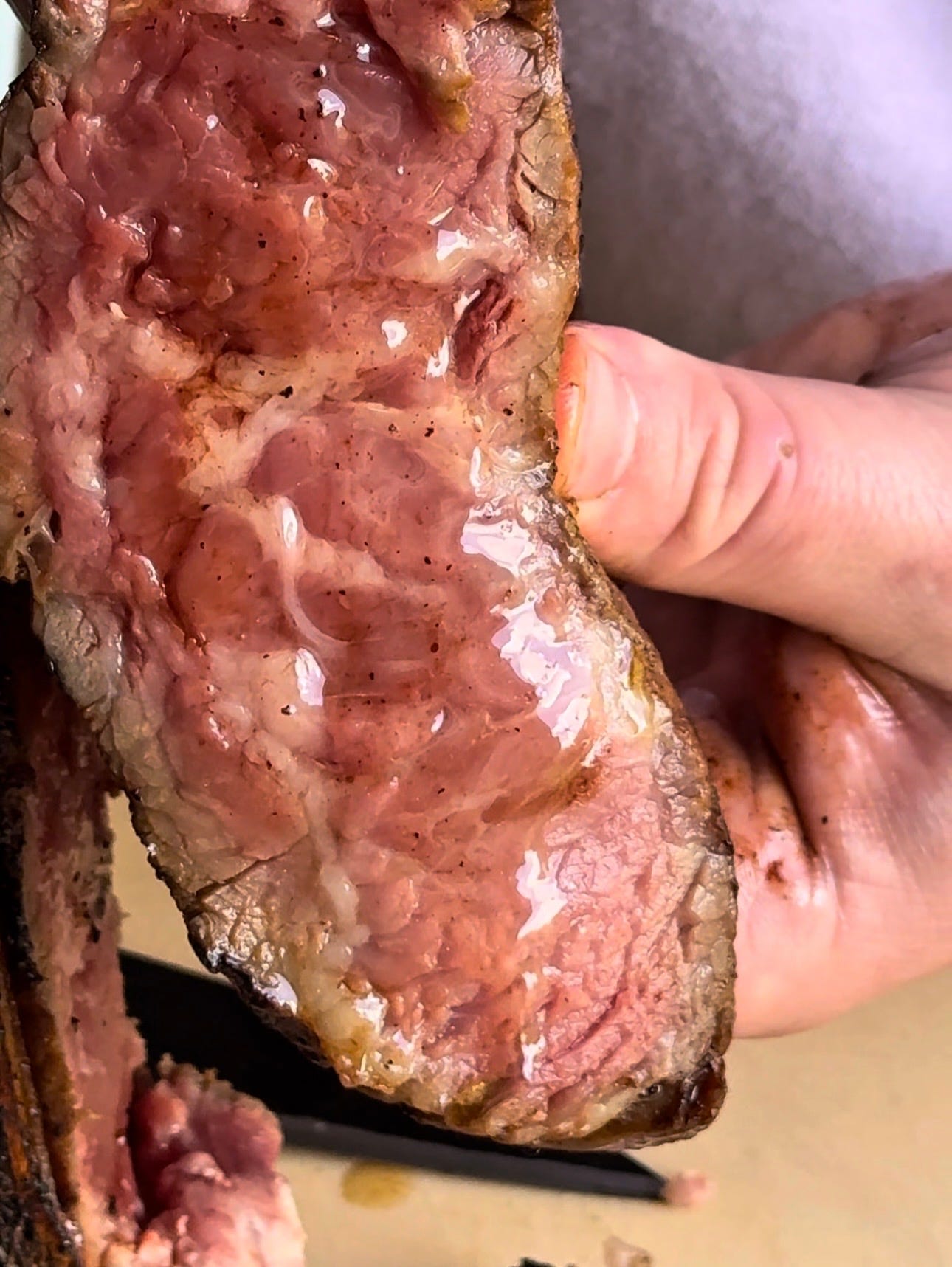
You get a juicy ass steak.
For the dashi:
Soak: submerge a sheet of kombu in 2 L cold water and let sit for at least 1 hour (or up to overnight for deeper flavour).
Heat gently: warm the water with the kombu until tiny bubbles form around the edges, just before it reaches a simmer.
Remove kombu: take out the seaweed at the first signs of gentle bubbling.
Boil briefly: bring the liquid to a rolling boil, then turn off the heat.
Add bonito: stir in a generous handful of katsuobushi (bonito flakes) and let steep for 60–90 seconds.
Strain: pass the dashi through a fine sieve or cheesecloth and use immediately or cool and refrigerate.
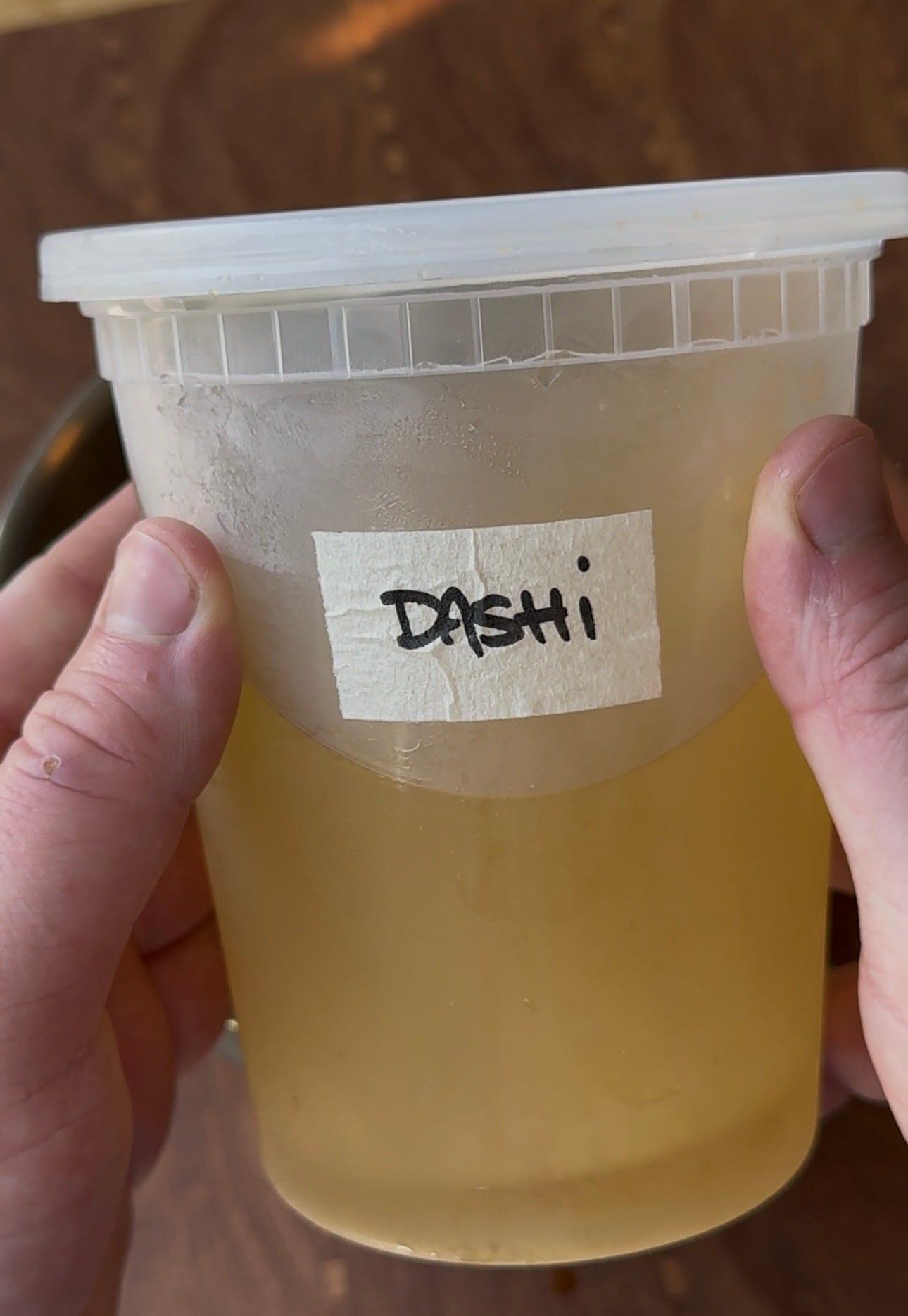
What I generally do, I make. a batch of 4x700ml, and freeze them.
Now the sauce:
Combine: pour ~300 ml veal demi‑glace with ~100 ml dashi into a small saucepan.
Reduce: simmer gently until the mixture thickens slightly.
Infuse: add 3 rehydrated shiitake and a generous handful of katsuobushi; remove from heat and let steep for 1 minute.
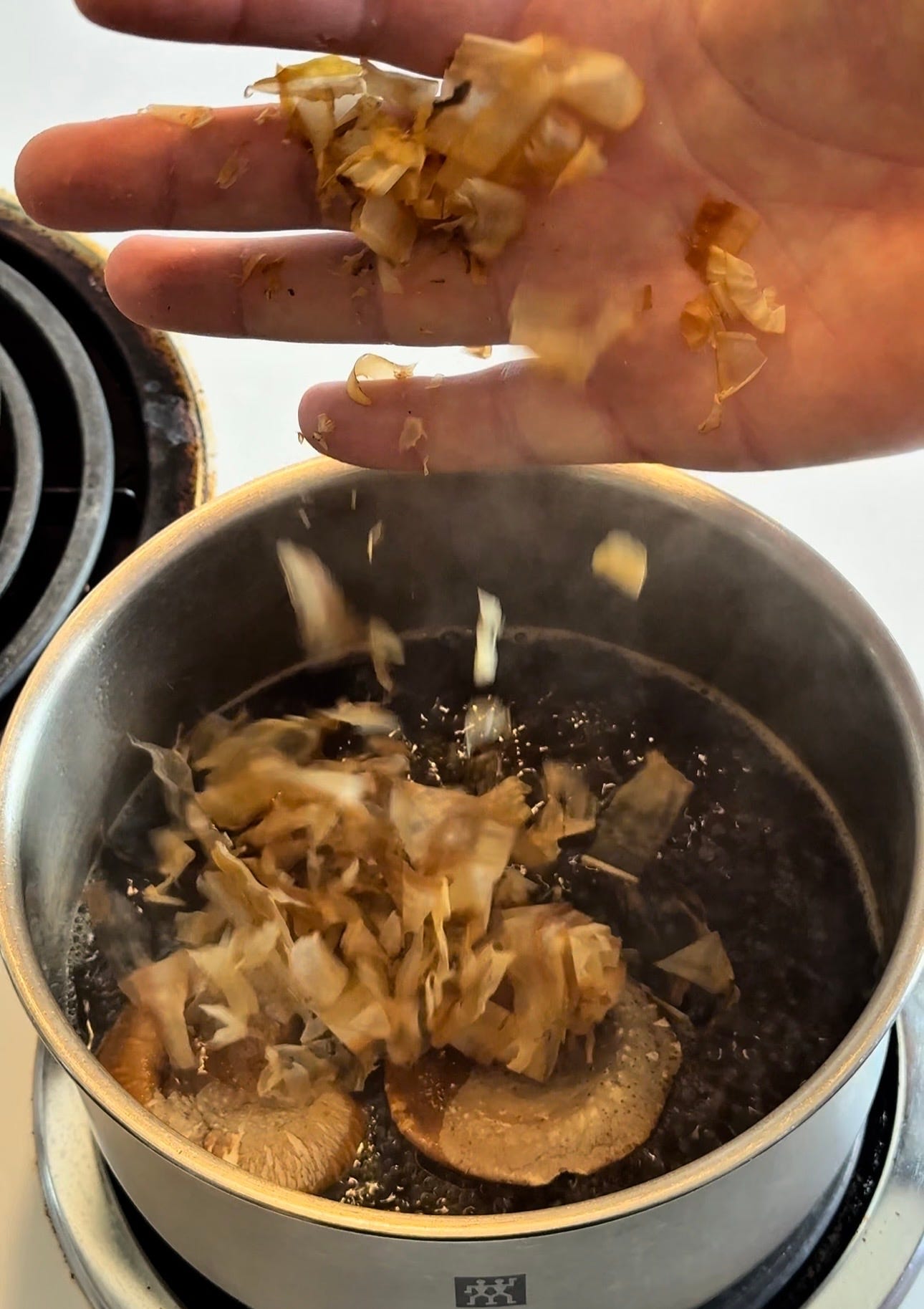
Strain: pass the sauce through a fine sieve to remove solids.
Reduce again: return the strained liquid to the pan and reduce until it coats the back of a spoon (nappe).
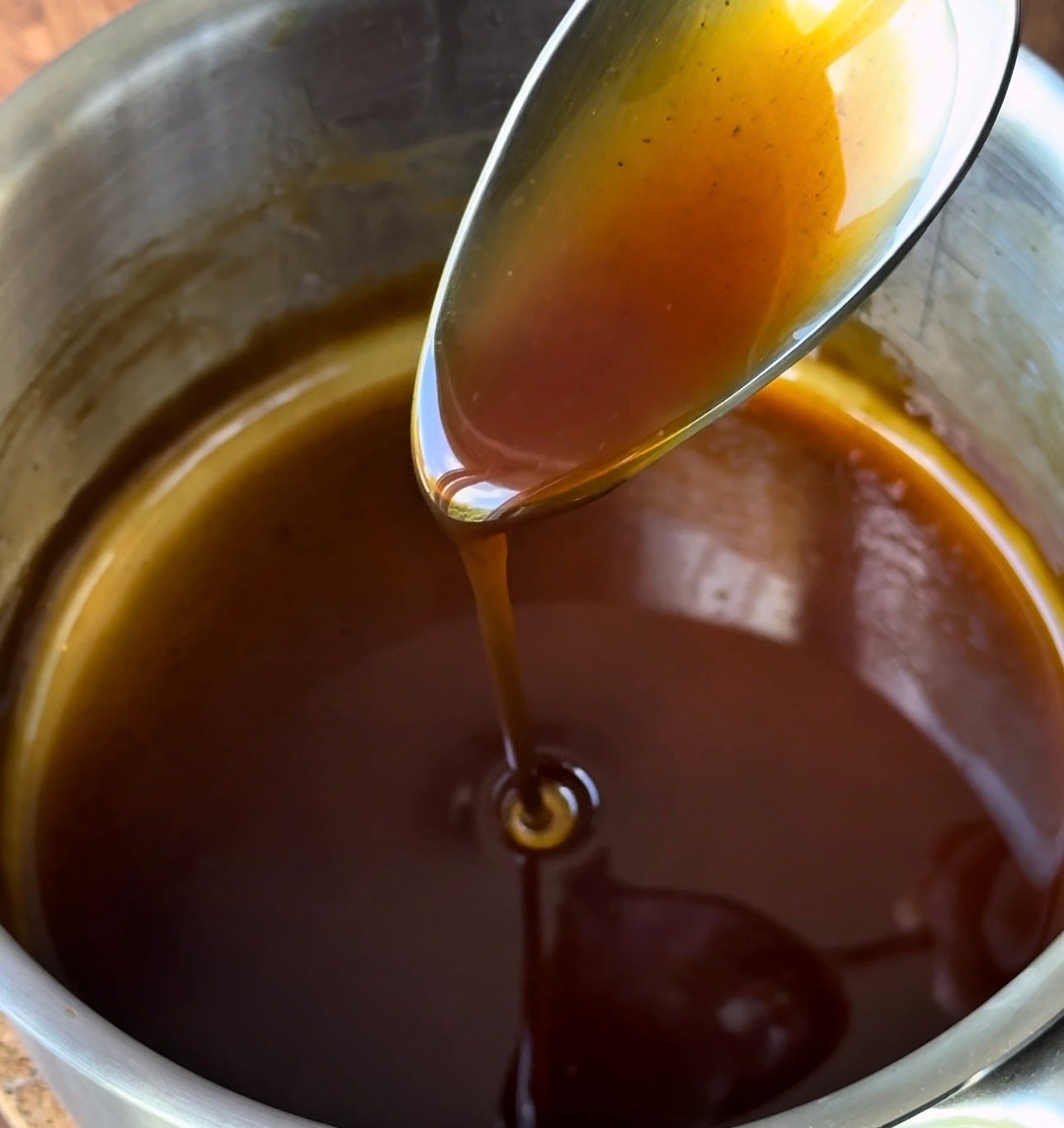
This here, is perfect texture, ready for a bit of crème fraiche, and soy for seasoning. Finish: whisk in a splash of crème fraîche and a dash of soy sauce to taste.
Adjust: check seasoning and balance with salt, pepper or a touch more soy/cream as needed.
The pomme dauphine:
Cook the potatoes: boil or steam starchy potatoes until very tender, then mash or pass through a ricer into a smooth purée. Season with salt and pepper.
Make the choux: in a saucepan bring 125 ml water and 60 g butter to a boil. Remove from heat, add 40 g plain flour + 35 g buckwheat flour all at once and stir vigorously until the dough comes together. Return briefly to low heat to dry the paste for few minutes, stirring.
Incorporate the eggs: transfer the dough to a bowl and beat in the 3 eggs one at a time until glossy and smooth, the mixture should be pipeable but still hold shape. Add some corn starch if you feel it misses strength.
Fold in the potato: gently fold the mashed potato into the choux until fully combined; adjust seasoning.
Shape: form small quenelles or balls (using two spoons or a piping bag) about walnut‑size.
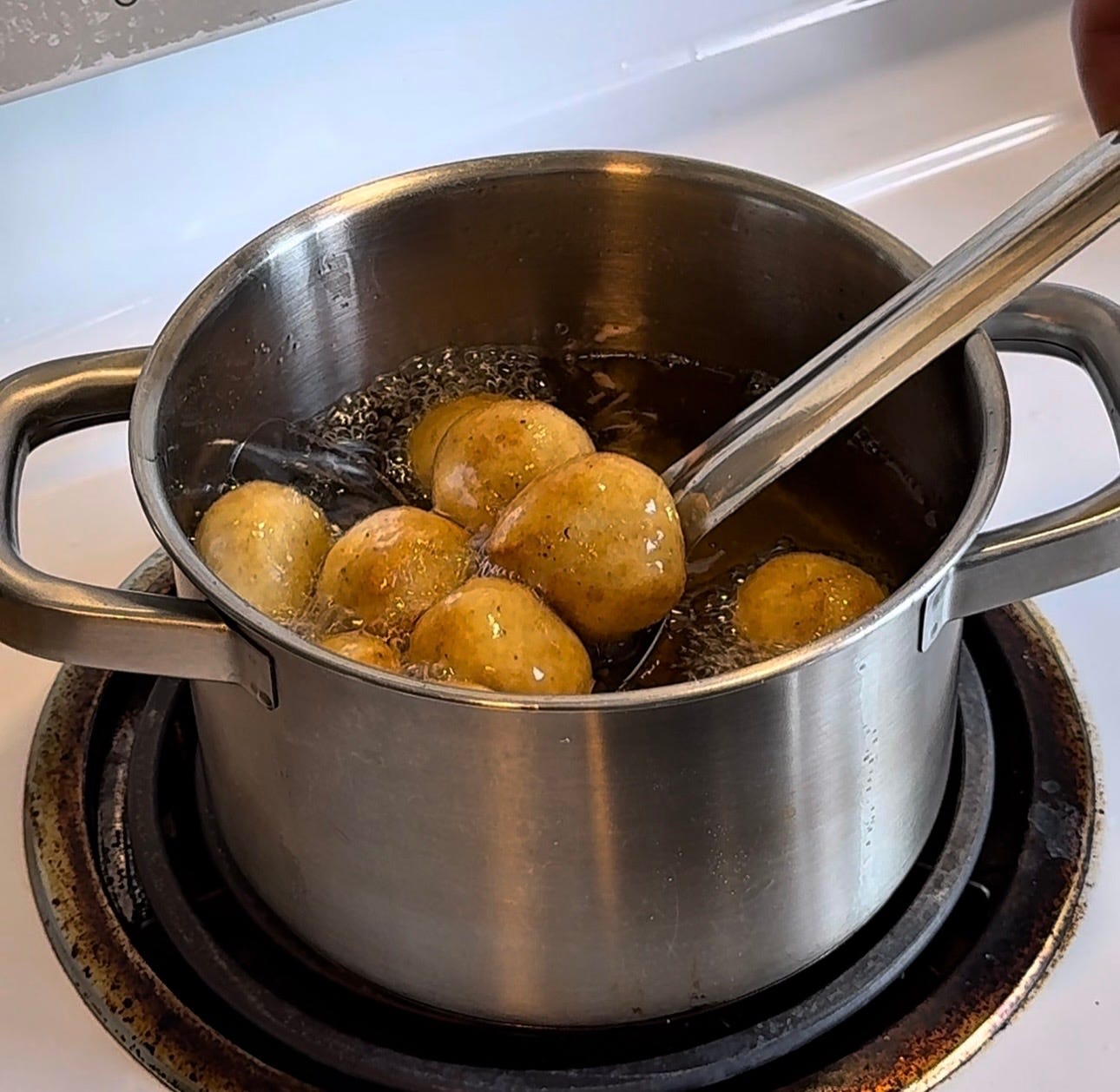
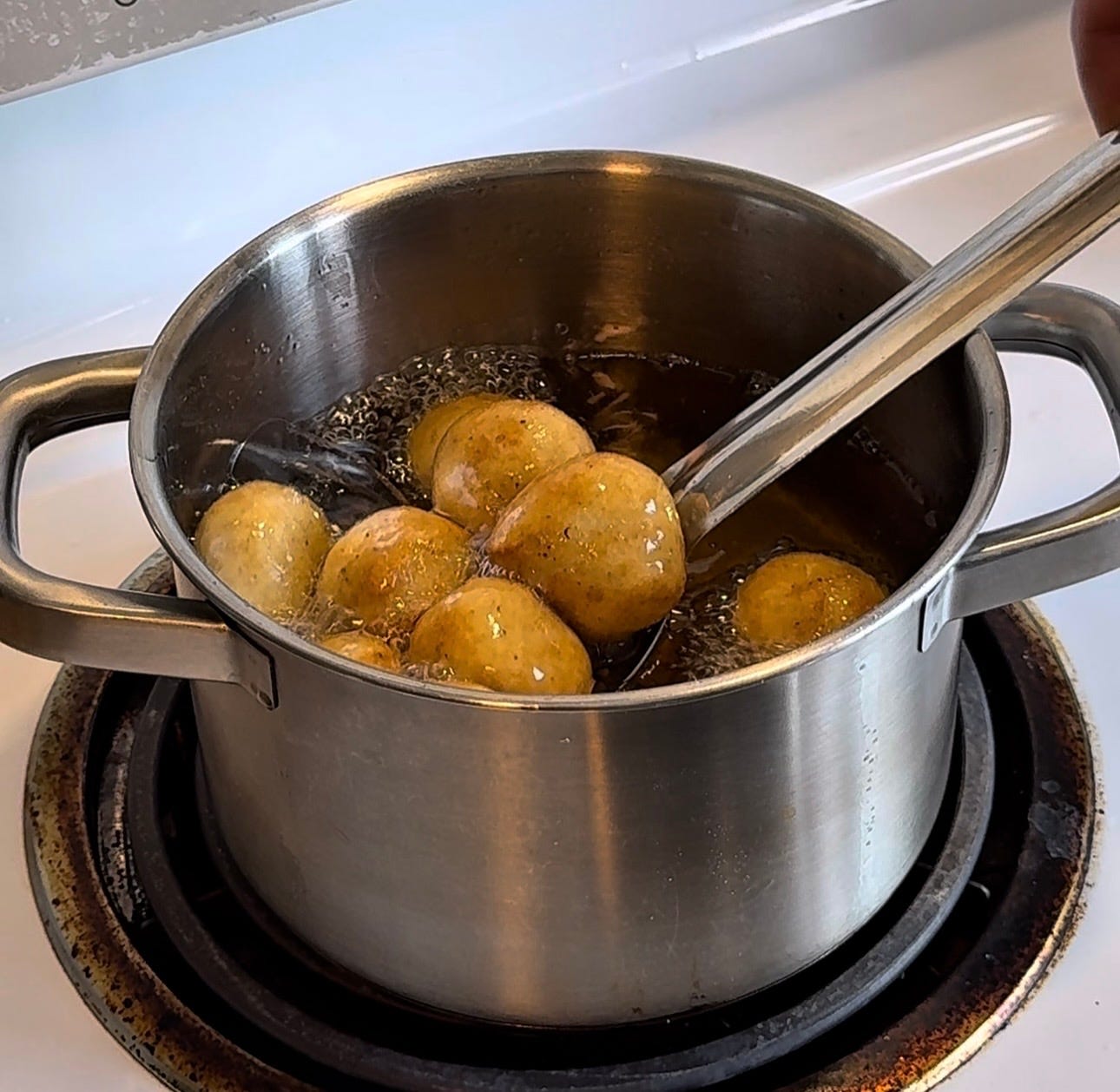
Fry: heat oil to 180°C and deep‑fry the dauphines in batches until puffed and golden brown. Drain on paper and season immediately with a pinch of salt.
That’s it, pretty much. I know it looks a little intimidating, but aside from sourcing koji, it’s straightforward. A few notes: koji speeds up browning, so the steak will caramelize (and can scorch) much faster than usual, watch your sear. The payoff is worth it: the marinade adds deep umami and a nutty edge that pairs perfectly with the smoky dashi‑demi jus. We had a blast making this with Robin, hope you enjoy it as much as we did!
definitely gonna have to get me some koji to try and ferment - do you have any other interesting flavor combinations or uses for koji that you like?
So cool! What an epic collab!